Showing posts with label cooking. Show all posts

Monday, August 3, 2026

Julie's Granola

Yes, it’s precious to announce this as my own recipe, since I openly adapt it from Carol Gelles, 1,000 Vegetarian Recipes. I think it’s an unspoken truism that any granola recipe is intended to be altered to fit what you have on hand, and what the saveur du jour happens to be. But I’ve tweaked it enough that it’s pretty much my own. But thank you, Ms. Gelles (or Carol, if I may).


A few ingredients notes: I like to use genuine sweetened carob chips. These days you have to hunt for them, because last time I looked, I couldn’t even get it at our local health foods store. Whaaaaaat—? Yes. But I seriously like carob chips in my granola, muffins, granola snack bars, and so on. I’m not going to try to make “chocolate” frosting, cake, or brownies out of it. But as a flavorful ingredient used like raisins or blueberries, they’re really quite nice. Be sure to used sweetened carob chips.

Cashew pieces: I’ve been buying raw cashew halves and pieces in a bag at the international store. Look for Swad brand, in the India aisle. Since childhood, I disliked cashews, but those were always Planter’s roasted and salted cashews. But when you them raw, you can toast them yourself, and season or not. Much more delicious.

And substitute stuff as you like. Just keep the overall quantities about the same: you need enough liquid-stuff to moisten enough for everything to get a little coated with the oat bran, wheat germ, brown sugar stuff. Also, the original recipe called for raisins. You could swap craisins or other dried fruits, nuts, etc. See notes after the recipe for more tips.

  • 3 T butter
  • ⅓ cup brown sugar (packed)
  • 1½ to 2 T juice (apple, orange)
  • 2 c. plain, rolled oats
  • ⅓ c. sunflower seeds (or pumpkin seeds)
  • ½ cup wheat germ (I use Kretschmar’s toasted wheat germ)
  • ½ cup oat bran
  • ⅓ cup raw cashew halves and pieces (or other nuts)
  • powdered cinnamon (to taste)
  • ⅓ cup sweetened carob chips (or chocolate chips)

Preheat oven to 350°F. (If your oven runs hot, set it at 325.)

Spray a 9-x-13-inch baking pan with Pam (Pyrex casserole dish is good). In a microwave, melt the butter, then stir in the brown sugar and juice until dissolved.

In a big mixing bowl, combine all the rest of the ingredients (except for the carob or chocolate chips, or raisins or any other dried fruit you might use). Pour the liquid ingredients over the mixture in the bowl and toss to get everything moistened. (Texture: you don’t want it soggy; if it seems too dry, you can add a little honey.)

Spread the granola mixture into the prepared baking pan and spread evenly. Bake, stirring and checking often, until dryish. The edges will brown first. Don’t let it burn.

Take it out; while it’s still hot, sprinkle cinnamon and the carob (or chocolate) chips over the top. The chips should melt a little bit, which is good. When it cools further, stir in any dried fruits you’re using.

Let it cool completely before storing in an airtight container.

Tips:

  • I suggest adding raisins or dried fruits after baking to avoid them burning. Burnt raisins are evil. I like chopped dried apricots, chopped dried, sweetened pineapple chunks, dates, craisins, etc.
  • Any kind of nuts or seeds are a great addition; the original recipe calls for 3 T. sesame seeds, but I usually don’t keep those on hand, and they go rancid quickly. But I keep sunflower seeds and pumpkins seeds in the freezer; they’re right next to the sweetened carob chips!
  • Granola: you know what to do. Sprinkle on yogurt with fresh fruits. Eat some out of hand as a snack. Eat it with milk as a dry cereal, or mix it in with other dry cereals. Sprinkle some on ice cream. This would be a nice garnish of a cold fruit soup or a fruit smoothie. And so on.

Friday, July 31, 2026

Healthy, Frugal, Simple, Kind

Yes, we need to exercise more, but a big component has been the food. Sue and I need to be eating more healthfully and more frugally, thanks to a confluence of stimuli. We’re both overweight. My A1C and cholesterol have been heading in the wrong direction. And “frugal”? That reflects national trends and my current personal situation.


There have been other stimuli that are more “carrot” than “stick.” First, the death—no, the memory—of Columbia, Missouri’s shining light of vegetarianism, Leigh Lockhart, founder, owner, and high priestess of Main Squeeze café, has led me to re-re-re-reconsider my attitude toward organic, sustainable, healthy, whole-grain vegetarian cooking. She was filled with joy about a sustainable, organic, healthy vegetarian lifestyle. Her slogan was “Goodness for all.” And she meant it!

Since her memorial gathering on June 27, I’ve been poring over Main Squeeze brochures I’ve kept in my recipe scrapbooks. Juices, smoothies, sandwiches, wraps, bowls, breakfasts, soups, hot dishes . . . the only real reason I stopped going to her café was because it was always incredibly busy at lunchtime. We’re talking lines out the door. And I didn’t work anywhere near downtown. Then, we moved out of town and were never even in Columbia for breakfast or lunch.


Also, I’ve been making my way through a new (to me) book, Johnathan Kauffman, Hippie Food: How Back-to-the-Landers, Longhairs, and Revolutionaries Changed the Way We Eat. It describes the historical and cultural ingredients, and movements, that created the cuisine we’d call “health food” in the 1960s, 70s, and 80s. This was the culture and the foods I encountered in Columbia at the food coop and with lots of college friends who made dishes such as “tofu and sprouts.” This was long before Whole Foods commodified health foods, added lots of fancy-schmantzy techniques and top-dollar ingredients, and quadrupled or sextupled the price. (Which is why suddenly it’s become a questionably unquestioned “truism” that “only the rich can afford to eat healthy food.” Hmm.)


Did you know that in college and grad school, I often ate a macrobiotic diet? Brown rice and beans with steamed vegetables. I always kept sea vegetables—hijiki and wakame—on hand! I was quite vegetarian. This was before I got really interested in cooking. And yet I was never strict about anything; I could always turn around, visit a restaurant, and enjoy kung pao pork, chicken mole, or yes, the occasional Quarter Pounder® with Cheese. But at home, I was quite frugal. Brown rice, beans, and veggies matched my checking account, for one thing, and it never, um, disagreed with me.

And I liked avoiding “factory food.” I grew up in a house where margarine was favored because, first, it was low in cholesterol, thus healthier, and second, it was a lot less expensive than real butter. But things changed, and by about 2000, I was switching to butter or olive oil for cooking, and relegating “I Can’t Believe” to a role as a basic bread or pancake spread. I quickly grew skeptical of Hamburger Helper and so on. A close friend in college turned me on to simple steaming and stir-frying vegetables, with only a small bit of lean meat.

So that was the diet I ate for several years.

Eating vegetarian food is also a positive for me because it has always made me feel MUCH less guilty whenever I had to see one of those awful livestock semis on the highway. Don’t tell me it doesn’t bother you, too, when you glimpse the eyes, faces, legs, and tails, or see a snout protruding from the holes, amid the excrement seeping around the bottom of the trailer. Don’t tell me it doesn’t make you feel uncomfortable to think about those living, breathing, intensely worried animals, trying to keep standing, breathing nasty diesel fumes at seventy miles per hour as they endure their one-way route to extermination. I’ve seen too many movies about the holocaust, when humans were treated that way, and I’ve never lost my innate empathy toward animals. I didn’t grow up on a farm and have that kindness and sensitivity crushed entirely out of me. Where does our innate empathy toward animals come from, do you suppose? I think we have more in common than we have differences.

The recent national and statewide cyclosporiasis outbreaks also give me pause. I suppose most stupid Americans will take that as an excuse to eat fewer “green things” and more beef and bacon. Look at how the spate of E. coli cases linked to fast-food restaurants’ handling of alfalfa sprouts led to alfalfa sprouts almost completely disappearing from all restaurants and grocery stores. The answer wasn’t to ensure that employees would simply wash their hands after wiping themselves in the bathroom. It was to remove the ingredient that couldn’t be cooked above 160°F.

It seems one of the best ways to avoid cyclosporiasis is to eat produce that comes from our local farmers markets. It’s not that I ever fully trusted that prerinsed, pretrimmed, prebagged, “where-did-this-some-from” greenery from the big groceries. I’m guessing those giant-ass nationwide produce companies rely on hardworking migrants who are given few potty breaks and nowhere to go when they are. And yes, I have trusted, even admired the produce department of my local Schnuck’s grocery. . . . But beyond that, our local farmers markets are happy places for me. For sheer shopping fun, I’d rather go there than, say, to any mall. Yeah, give me a little more of a push to go to the farmers market!

I’m sensing a new direction. I’ve learned a lot more about cooking since the first time I plunged into healthy eating. I know how to deploy a wide range of spices and how to make masalas, how to cook without scorching stuff, how to make crêpes and sauces and omelets, how to adjust baking times and temperatures to my old, idiosyncratic oven. I know how to make my own sprouts, which will of course be completely free of cyclospora and E. coli. The only thing that can’t really be shortened is prep time, but it appears I might have some extra time on my hands. Healthy, high-fiber food is filling. So be it. Time to lose some weight, anyway.

Thursday, November 24, 2022

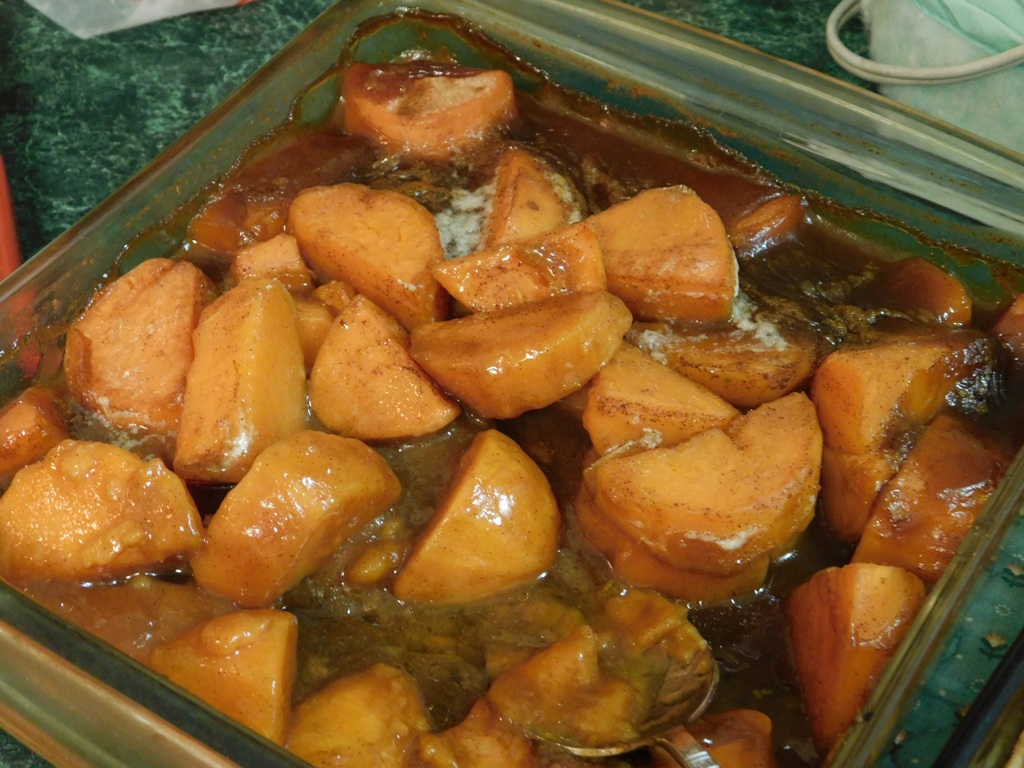
Florence Biffle’s Sweet Potato Bake

Happy Thanksgiving!

This fantastic yet simple recipe, titled “Sweet Potato Bake,” is from Mrs. Florence M. Biffle (1914–2006), who was a member of Faith Lutheran Church in Jefferson City. I recently found her obituary online. I’ll bet my Great Aunt Lydia Meyer knew her well, since she was a longtime member of the same church and was also a quilter. Also, I’ll bet my Grandma Schroeder and Great Aunt Minnie Bartlett new Mrs. Biffle, too, since they were all longtime members of Jefferson City’s Hawthorn Garden Club.

I never knew Mrs. Biffle, but I feel I could easily have known her. There’s a good chance I was in the same room with her at some point, and just never knew it. Anyway, I’m grateful to her for this recipe, and for these small connections between our worlds.

I noticed she was buried out at Hawthorn Memorial Gardens cemetery, so in a few weeks when I'm out decorating Grandma and Grandpa Renner's grave, I'll see if I can find Mr. and Mrs. Biffle.

This recipe was on p. 49 of Cooking with Faith: Favorite Recipes of Faith Lutheran Church Women, Jefferson City, Missouri, by the Faith Lutheran Ladies Guild, Jefferson City, Missouri [ca. 1975].

This is an interesting, fruity-glazed alternative to the standard (and I think tiresome) sweet potato casseroles made with brown sugar, pecans, and marshmallows, so common at the Thanksgiving table. I think you’ll really like this for a change of pace.

I’ll offer my tips and suggestions after the recipe.

Sweet Potato Bake

Cook 4 to 6 sweet potatoes until almost tender. Skin and cut to desired size (chunks). Place in a casserole dish.

Combine and bring to a boil:

1 c. apricot nectar
2 T. orange juice concentrate (not diluted)
½ c. brown sugar
1½ T. cornstarch
1 t. salt
½ t. cinnamon
2 T. butter
½ c. water

Pour over the potatoes and bake 30 to 40 minutes at 350°F.

Julie’s notes:

You can peel the sweet potatoes and cut them into chunks, then cook them in gently boiling water if you don’t want to bake them. I have also steamed them, and that works, too. But don’t overcook the potatoes; remember they will be cooking for another half hour in the oven.

I use a 9 x 9 Pyrex baking dish. You will cook it uncovered, so what begins as a liquid dressing reduces to a gooey glaze over the potatoes. Pull them out of the oven when the sauce is gooey enough for your taste.

The dressing mixes up most easily if you first combine all the dry ingredients together before adding them to the liquid.

Kern’s Apricot Nectar, which is no doubt what Mrs. Biffle had in mind, used to be available at all the grocery stores around here, but I haven’t seen it in years. I think the company’s out of business. There’s another brand called Jumex, but I’ve never seen it except online. I’ll bet it’s something to look for at an international store. Both seem to contain high fructose corn syrup and other less-than-desirable ingredients. But it’s no problem if you can’t find apricot nectar. Just take some canned apricots and some of their juice and puree it in a food processor or bullet blender, so it gets to the consistency of a thick “nectar” type juice. You only need a cup. A bonus of doing it this way is that you can decide how much corn syrup to include (since you are selecting your can of apricots—in heavy syrup, light syrup, or whatever). You can even puree the apricot pieces with just water, if you want.

There's no reason you couldn't use dried apricots, simmered in water until they're perfectly soft, then process those in a bullet blender or run them through a food mill, to make them into a liquid puree. I suppose that would be healthier. But I think using canned apricots with their corn syrup is more authentic to the midcentury church ladies cooking style.

Do-ahead tip: You can put the peeled, precooked potato chunks and the uncooked sauce into the casserole dish, dotting the butter on top, covered with plastic wrap, and refrigerate overnight. Or out on your unheated sunporch, if it’s cool enough. Finish it in the oven the next day.

Tuesday, June 14, 2022

Alfalfa Sprouts in 2022

We used to eat alfalfa sprouts all the time back in the day. We used to be able to buy them at the store, at regular grocery stores. Back in the 1980s, all the salad bars had sprouts. (Remember Roseanne Barr’s Pizza Hut commercial where she talked about “grazing on a delightful array of sprouts and garbayennnzo beans”?) (Well, hey, remember salad bars?)

And all the health food groceries had deli cases with freshly made sandwiches full of alfalfa sprouts. And on the other end of the spectrum, until quite recently (at least) the sandwich chain Jimmy John’s had a sandwich or two that featured alfalfa sprouts . . . though it seems they’ve dropped the sprouts entirely, though.

You used to be able to buy a variety of sprouts, even: onion sprouts, broccoli sprouts, "spicy" sprouts (a blend with radish sprouts, which taste peppery), and clover sprouts. What happened?

Now it seems that sprouts are impossible to get, unless you grow your own. Jimmy John’s had a problem with its sprouts by the name of E. coli; maybe that made people scared of sprouts. (Though that’s silly, because there’ve been plenty of E.coli incidents with pre-packaged lettuce, and people keep buying that. . . . And the problem has more to do with worker hygiene and proper rinsing of the produce than it does with the produce itself.)

Or maybe people decided that sprouts symbolized something that’s uncool today: All that not-indulgent, low-fat food from previous decades’ health food movements. And honestly, I’m guilty of referring to that era’s health foods as “tofu-and-sprouts” cuisine. But it’s one thing to laugh at them as a symbol, but another to actually dislike them.

Or maybe people today have no concept of how to care for their sprouts, once purchased. Unlike grocery store strawberries, they’re not immortal. And you can’t think of a more tender produce item.

. . . Or maybe grocery stores’ produce suppliers can’t provide the right kind of schedule to keep the stores’ stock fresh. And proper care extends to the stores, too: there are times I’ve seen a produce department’s automatic sprayers dripping water into the sprouts’ plastic containers, flooding them, turning them into a mossy brown little swamp.

And yeah, it does seem like the most recent times I’ve seen alfalfa sprouts at the store, they’re old and brownish and wilty, also known as “no good.” No one wants them when they’re bad, but if no one buys them quickly enough, they go south and you can’t sell ’em. Pretty soon, the store has a reputation as “not a place to buy sprouts.”

But guess what? Alfalfa sprouts are ridiculously easy and cheap to grow on your own. They are tasty and nutty. They are a great way to add crunch and nutrients to your sandwiches. And! They contribute to a sandwich’s or burrito’s structural integrity, because they behave like a sponge with sauces, tomatoes, or other slippery ingredients, holding them in place (lettuce, on the other hand, is incredibly slippery and causes your sandwich ingredients to slide right out of the bread). (I hate that so much, I often chop lettuce before putting it on a sandwich, to make it more like sprouts.)

I love to have alfalfa sprouts on three of my favorite health-food sandwiches: tofu salad, brick-a-broc, and ye olde samurai sandwich. But they’re also great on just about any other kind of sandwich. They’re great on peanut-butter-and-jelly sandwiches, even. Yes!

You can also use sprouts on salads, of course, or use them as a garnish on just about anything, because they’re pretty. The original “microgreens.”

Have you ever grown sprouts before? It’s incredibly easy.

Here’s the deal: Go to your local health food store (or go online) and get what you need. There are alternatives, but I use a simple plastic mesh lid—a sprouting lid—created for growing sprouts. The kind I have fits on a wide-mouth one-quart canning jar.

And yeah, you’ll need the jar. And you’ll need the seeds for the sprouts (again, get it at the health food store, where they might just have them in bulk). (Fresher is better.) (And yeah, they make a lot of sprouting seed mixes—it’s not just alfalfa sprouts; you can have fun trying different sprouts.) Oh, and you’ll need a towel and a dish drainer.

If you follow the directions (see my well-used copy, above), a mere tablespoon and a half of alfalfa seeds will become a quart-jar full of sprouts, in about a week. Yes, you will need to tend to them, three times a day. Don’t worry; you don’t even have to open the jar until they’re all done. Three times a day, run some fresh water in through the mesh lid of the jar, swirl it a little to rinse the seeds/sprouts, then turn the jar on its side, at an angle, and let the water drain out. Keep the jar wrapped with a towel (or some other way in the dark) and tilt it at an angle while they’re growing.

I do all this in the dish drainer of my kitchen sink. Because I visit the kitchen sink many times a day, the thrice-daily tending is no problem. I certainly can’t forget them, because there they are.

They really grow rapidly. It's fun to see.

On the last day, give them some light (not too much; you don’t want to cook them via the greenhouse effect), and their tiny little leaves will turn green.

At the end, you’ll want to remove the the brown seed coats that have separated from the sprouts. I use a stock pot: put the sprouts into the pot and run fresh cool water over them. Swish them around a little. The seed coats will float on top while the sprouts swim around below. You can skim away the seed coats, or just pour or flick them off the top. Then, fish out the sprouts (I use my hand) or use a colander, and set them in the colander or on paper towels for a few minutes. Then, transfer them into a plastic bag, and you’re done. If you have extra cold spots in your refrigerator, make sure the sprouts don’t freeze. And use them while they’re fresh.

You’ll be amazed at how delicious they are, and so fresh.

Wednesday, April 20, 2022

Silog Breakfasts Are Great!

Filipino breakfasts are wonderful! They’re called “silog sets” or “silogs,” and they’re enough like American breakfasts they can slip right into Americans’ breakfast menus like a sunny-side-up egg off a greased rubber spatula.

Tapsilog: Filipino steak 'n eggs with garlic fried rice. Note the spicy-vinegar dipping sauce.

I’ve never eaten this stuff at a restaurant; I’ve only followed recipes and watched videos, but I think I’ve got the idea. In fact, I think it’s understood that everyone has her own way of making a silog breakfast, so there’s not any official way to do it . . . although for you there might be a perfect way of making it.

If you’ve never heard of a silog breakfast, or never seen it at a restaurant, then that’s only temporary. People in American coastal cities are catching on to this wave, big-time, so those of us here in the Midwest mid-sized cities will soon see it at our restaurants in the next decade or two! . . . But you don’t want to wait for a Pinoy food truck to come park on your Main Street.

My silog-set explorations come from a lovely, huge cookbook about breakfasts entitled Breakfast: The Cookbook, by Emily Elyse Miller. It’s one of those huge Phaidon cookbook compendiums: “the only book about _____ you’ll ever need.” In this case, it’s a huge collection of breakfast recipes from around the world. Like, almost everyone on Earth tends to have eggs for breakfast, but there’s a big difference between American sunny-side-up eggs, artfully folded, lightly sweetened Japanese tamago, Iranian scrambled eggs with dates and turmeric, and veggie-packed Korean omelet sandwiches. And guess what? They’re all delicious! . . . Same goes for porridge, toasts, sweet rolls, meats, and so on.

Back to the breakfast style in question. A “silog” is a Filipino combo-breakfast. You know how traditional American breakfasts have eggs (“how you want that cooked, sweetie?”), hashbrowns (or grits—a starch), and your choice of meat: bacon, ham, or sausage? And you can ask for a bottle of Tabasco to spice it up? Well, a “silog” is about the same thing, only it’s egg (usually sunny-side-up, but it’s your breakfast and your choice), a quick-cooking meat (thin-sliced, marinated, cooked steak; homemade longanisa sausage; fried sweet-cured pork; fried Spam; etc.), and garlic fried rice. To jazz it up, there’s a dipping sauce or garnish called sinamak, a spicy vinegar with ginger, garlic, onion, chilis, and black peppercorns (it varies with region and what you like; you can buy it at an international store, but it’s super easy to make on your own, and it lasts a long time).

(I love these kinds of cultural parallels. It’s like when I realized that both Korea and Germany have (a) a history as a divided nation, (b) powerful industrial economies, (c) a huge love of beer, of fatty meats, and of singing, and (d) fermented cabbage as a national dish.)

Anyway, the name of each version of the Filipino breakfast meal changes as the protein changes. The rice and egg are the constants, so the term “silog” is a contraction for sinangag (the garlic fried rice) and itlog (egg). Then, the first part of the meat-name is tacked to the front:

  • Tapa (beef): Tapsilog
  • Longganisa (sweet and/or garlicky pork sausage): Longsilog
  • Tocino (sweet, meaty, fried cured pork): Tocilog
  • Spam (yes, from the can): Spamsilog
  • Bacon: Bacsilog

Why not also turksilog (turkey), chicksilog, hamsilog, and so on? Indeed, they really do stuff like this. There’s even a hotsilog (you guessed, it, with hotdog). I think “kielbasilog” would be good.

Here’s the fun part: it’s all easy to make from scratch, using ingredients readily available at any standard American grocery store. Ginger, soy sauce, and sesame oil are the most unusual ingredients, unless you also count good white rice as an unusual ingredient, too.

Here’s the part that makes it especially perfect for breakfast: you can do most of the work the day before. The meat is prepped and marinated well ahead of time (or if you make your own Filipino sausage, then you can do up a big batch, freeze it, and use it here and there as you wish). Or, just use whatever meat is leftover. And the fried rice, like fried rice everywhere, uses leftover rice—such as leftover rice from Chinese takeout.

Sinangag: Filipino garlic fried rice.

The only real prep work is peeling and mincing garlic right before you fry the rice, though I bet a lot of people will just use minced garlic from a jar.

Breakfast-making needs to be simple, you know? You’re staggering around, you’re in a hurry, you haven’t had your coffee yet . . . (Please, please read this essay about breakfast by my beloved John Thorne. This one, too.)

I’ve found that I can use the same nonstick wok for all of it: cooking the garlic fried rice first, putting it in the oven to stay warm beside the serving plates; then cooking the meat and putting it in the oven, too; then rinsing or wiping the pan and doing the fried eggs. Ta-da!

Cooking tapa.

It’s a really tasty breakfast. It seems less heavy and salty than the traditional American breakfast. The garlic makes the whole house smell delicious. The runny yolk of the fried egg is a creamy dressing for the rice and the meat, and the meat and its juices dress the rice and the egg. The spicy vinegar dresses and brightens everything with ginger-black-pepper-pickled-onion flavor.

Tapa is thin-sliced steak cooked in a delicious marinade.

It's a lot like teriyaki beef.

Oh, I forgot to garnish my plate with anything fresh, like sliced tomato or cucumber, but yeah, you can do that, too, if you can think to do it before the rest is done. Because once this food is ready, it’s definitely time for breakfast!

I’m not gonna give you any recipes here, since I’m still in the phase of tweaking the recipes like I want. (Like, my cookbook calls for “sugar” in the tapa marinade, but I’ve decided to use “brown sugar.”) There are plenty of places to find recipes online (here’s a good one that introduces basic techniques for the big three meat choices, though you can find much simpler and perfectly fine recipes elsewhere; and this one has good commentary on the garlic fried rice), plus, again, that highly recommended, highly entertaining breakfast cookbook I told you about; it has good basic recipes, enough to get you started.

Monday, January 17, 2022

Reflections on Holiday Baking and Gratitude

Here’s an unusual post for you: a letter I sent to my aunt last month. I enclosed it with the box of Christmas cookies I sent her. She financed our new refrigerator back in 2002, soon after we’d bought the house. She’s an excellent cook, a master cookie baker, and I hoped she’d enjoy reading about some of my kitchen adventures and reflections.

Maybe you will, too.

Dear Aunt Ann,

Merry Christmas!

I hope this letter and package finds you well and feeling warm and satisfied this winter. Twenty-twenty-one!

As I packed up your cookies last night, I thought again of the kind comments you have made about my springerle cookies. Mom told me that you’ve said they were “the best you’d ever had” (or something like that). My immediate reaction was to laugh—to snort out a healthy Pshaw!!—because my dilettante, amateur-level cookie-making “explorations” certainly are nowhere near the level of the cookies made by all the grandmothers, great-aunts, aunts, friends, and family of my childhood (including Mom and yourself).

When I was a kid, it seems all the ladies made a good variety of cookies, using recipes they’d used for decades, which were handed down to them from their mothers, grandmothers, friends, and neighbors. They were sure-handed, confident cookie bakers. . . . At least that’s how it seemed to me. If there were any disasters, I sure never knew about it. (Now I know: cookie-making “disasters” stay at home and are not shared, except with children who are none the wiser. Even if the texture or the shape is wrong, the “failures” usually are still delicious. And if they’re really bad, the squirrels and opossums get a Christmas treat!)

. . . And it seems everyone would try out a new recipe each year, just for fun, and for the variety. Like people sometimes say, “throw a lot of ideas at the wall and see what sticks.” Sometimes one of these novel recipes would “stick” and became a new family favorite. Sue’s mom did that a lot and ended up with plenty of kinds of cookies to bake each year!

I was present, as a child, when the venerable “orange balls” recipe joined the family. I keep that cookie alive singlehandedly today for the warm memories it brings to me. The recipe came from the then-secretary of the MU Geography Department—she must’ve brought some orange balls into the office to share, or maybe she made plates of cookies to give as gifts—and Dad got the recipe from her. He and I adopted it as one of our favorites, a dad-and-daughter activity during the holidays. Not having a food processor then, we’d grind the vanilla wavers on the slick, Formica-topped kitchen table using Mom’s wooden rolling pin. It was great fun to sit there and crush up those wafers with Dad! You can’t go wrong with no-bake cookies!

This year, I’ve tried a new recipe. It’s called a “spumoni” cookie, and it has chocolate chips, pistachios, and dried sour cherries. I first had them a few years ago at Kingston, the assisted-living place where Mrs. Ferber was living. The cooks of the cafeteria organized a cookie-exchange party for the residents. The Kingston residents could invite their families, and everyone got to try a variety of cookies fresh-baked in Kingston’s cafeteria kitchen, with live Christmas music by a local-favorite entertainer and his electric piano. There was eggnog, hot chocolate, and coffee. What a fun afternoon that was! All told, Kingston wasn’t perfect (what place can be?), but it’s the kind of place that I would be lucky to live in one day . . . Unfortunately, the night I made the spumoni cookies, I ran out of almond extract, so it has half the amount it should have, plus I kinda overbaked them . . . but what the heck: chocolate! I really love this combination.

I am lucky to have so many family favorites—from both sides of my family, as well as from Sue’s mom, now—to choose from. I’m one of the few who bakes them anymore. Christmas is about the only time I ever make cookies, but boy-howdy, it’s a whirlwind of cookie baking!

The date-nut bars and spice cookies are two of Mrs. Ferber’s longtime favorites. Other Ferber favorites include pecan puffs (“delectabites”), haystacks (so easy to overcook and turn into rocks), peanut butter no-bake cookies (or, as Sue’s brother-in-law blasphemously called them, “yard sausages”—if you don’t know what that means, ask any dog owner), jubilee jumbles (with that magical browned-butter icing), and green-colored spritz cookies in the shape of wreaths (I’ve never attempted those; I lack the equipment and, probably, the temperament). She was also a big candy maker: Fudge! White-chocolate peppermint bark! Buckeye candies! (Mr. Ferber had a sweet tooth!) Mrs. Ferber used to tell stories of growing up during the depression on North Bass Island in Lake Erie, and how she and the neighbor girls would get together to pull taffy.

I find it so interesting to see how recipes change. Great-grandma Thomas’s lebkuchen recipe was passed down to both of my grandmas: her daughter Edna Schroeder, and her neighbor Clara Renner. I’m lucky to have handwritten recipes from all three, so I can track the changes. Wilhelmina Thomas’s recipe called for lard, and a later version, in Grandma Schroeder’s hand, switched it to Crisco. Grandma Renner swapped citron and lemon peel, raisins, and currants with candied mixed fruit and raisins, and she’d grind the fruit in her hand-cranked meat grinder. These are just some of the changes.

And none of them specified what was meant by “molasses.” Maybe it would change in different years, depending on what they could get their hands on. I’ve read that authentic German lebkuchen (gingerbread) are pretty much synonymous with honigkuchen (gingerbread made with honey). In America, German immigrants—if they had access to honey—sold it for cash. Then, for their own baking, they used the more frugal and readily available sorghum molasses (sweet sorghum syrup), which has a bland flavor unlike that of sugarcane molasses (such as Brer Rabbit or Grandma’s). I’ve read that the honey/molasses distinction is one quick way to tell the difference between a German lebkuchen recipe and one from German-American immigrants.

In most recent years, I’ve gone out of my way to find nice, mild sorghum molasses for my leppies. (It’s a trip to the Mennonite store.) But this year, I was inspired to substitute a bit of Brer Rabbit Full Flavor just for fun. I think they taste better for it.

I’ve had to figure out a lot of stuff that wasn’t written in the recipes that have come down to me. I didn’t learn at my grandmas’ knees. It seems they were never baking cookies when we visited, and I wasn’t much interested in cooking, anyway. If I’ve tweaked recipes over the years (as I’m sure they did, too), it’s because I’m merely trying to figure out how to more perfectly match the cookies I remember gobbling up as a child.

Beside all the smudges and spatters, my recipe cards are full of penciled-in notes: “don’t crowd these on the cookie sheets”; “Mom uses margarine”; “2012: this made ___ dozen”; “DOUBLE THIS”; “2 tsp. 4 tsp. ground cardamom (Evelyn Baur doubles it, Yay for cardamom! :-D)”; “dough has to be really stiff, so it hurts your arm to stir”; “don’t double this and use big pan; instead, make two separate batches in 8 x 8 pans.” (Blah, blah, blah. If I didn’t pencil them in, I’d forget them over the course of the following year.)

This year I finally realized that Grandma Renner scooped her flour out of her flour bin or canister with her measuring cup, then used a knife to level the top; whereas I had learned to spoon the flour into the cup before leveling, which makes it fluffy, not packed, so the amount of flour is different. No one ever writes the method for measuring flour on their recipes—you’re just supposed to know. And if you don’t, then you should at least know how stiff the dough should be, and adjust accordingly as you mix it . . . well. As I said, I’m a dilettante. More than twenty years into this, and I’ve finally figured out a key to getting billy goats right. So the first half of this year’s batch of billy goats, once again, spread out flat in the oven, while the second half, after I’d stirred another half-cup of flour into the dough, finally lumped up properly.

And Grandma Renner’s recipe calls for a cup of butter. But Mom told me that she (Mom) always used margarine. Of course, this affects the texture and flavor. So I, myself, split the difference and use a stick of both, to equal one cup. This year, Mom announced my billy goats are on the dry side and suggested I left them in the oven too long, the way she says Grandma Renner routinely critiqued Aunt Lyd’s billy goats. Ah, the relentless pursuit of perfection! Fortunately, it’s nothing that a week sealed up in a tin with half an apple loosely wrapped in wax paper won’t fix.

I think billy goats are my current favorite (the date-nut bars are right up there, too). I love how the dates, black walnuts, brown sugar, cinnamon, and vanilla come together to the point where not one of them really tastes the same. It’s a synergistic combination that creates a new flavor, which I like to call “billy goat.” I’ve made “billy goat” pancakes and “billy goat” oat bran muffins. I ought to try a “billy goat” quick bread, too.

While I’m on the subject of black walnuts: as usual, please be advised that some of the nuts were hand-shelled, and even the mechanically shelled ones aren’t perfect. So chew carefully. I’d hate for you to have to make a trip to the dentist.

I’ve recently been paying close attention to recipes in old cookbooks (my favorite bedtime reading) for billy goats and their close relatives, hermits and “rocks.” These chunky-looking drop cookies all have a large proportion of dried fruits (raisins, currants, and/or dates) and nuts (usually pecans, walnuts, black walnuts), and they usually call for at least half the sugar to be brown sugar. They were very popular in the 1930s and 40s among the moms who had taken “domestic science” classes, endured the depression, and viewed themselves very seriously as the manager of their children’s health, as well as the food budget. Billy goats, hermits, and rocks not only taste great but also are relatively healthy, providing actual nutrition, compared to handing your children sugar cookies or candies after school. I see billy goats, hermits, and rocks as the grandmothers of the granola bars and fruit roll-ups so popular today.

Springerles: they’re everyone’s favorite. I was already making them for some years before I found a very old recipe from Great-grandma Thomas, which called for hartshorn (baker’s ammonia, or ammonium carbonate). I’ve never even tried that recipe, though I’ve had plenty of other people’s springerles made with that unusual ingredient—and I think mine are better. They’re lighter. Mine are made from my precious 1949 edition of the Good Housekeeping Cook Book, one of the possessions of Dad’s Cousin Marguerite (Fieker/Donovan/Miskell) that I claimed when the family was emptying her house . . . Although the book’s binding is shot, and the front cover is long gone, still tucked within its thin, brittle pages is the cute, pink-flocked Christmas card from Great Aunt Esther and Uncle Emil that accompanied it when they gave it to her. (What a treasure!) It’s full of great, basic recipes, made with whole foods.

So, no hartshorn in the springerles—this is a modern recipe from 1949!—it calls for sifted cake flour, baking powder, eggs, powdered sugar, and grated lemon rind. For anise flavor, it tells you to sprinkle anise seeds on the trays and lay the freshly rolled and cut cookies on them. I soon learned, for a punchier, less haphazard flavor, to use anise extract. Then, a few years ago, shopping at a Mennonite store, I unwittingly purchased anise oil. (You’ve got to read those labels carefully!) That year, they tasted like black jelly beans! (Though . . . some people really liked them that way, so there’s no accounting for taste!)

-------------------------------

I should probably end this meditation on Christmas cookie baking, but I want to add one more thought—something that’s been on my mind the last few weeks, as our refrigerator that you bought for us back in 2002 became intermittent, seemed to recover for a week, then finally chilled its last. I’m sure Mom has told you of its demise, that white Frigidaire side-by-side that has served us so well. We picked it out at Lowe’s about a year after buying Grandma’s house. I don’t remember what was wrong with Grandma’s old fridge, but it must have been going south. Our new fridge, though fairly basic by 2002 standards, nevertheless had an ice and water dispenser, and it has always seemed like a luxury to me, a real treat.

I think I recall that when we bought it, it had come with a projected lifespan of about 15 years. (Today, fridges are projected to last for a mere decade, while my parents still have their General Electric from 1965 in their garage as their soda-and-extra-stuff fridge; it’s still going strong!) We have another Frigidaire in our first-floor kitchen that we bought in 2009, when the one down there quit. It’s a no-frills, freezer-top version that has been invaluable as our main fridge has gone kaput.

Mom probably filled you in on some of the details of our finding a new refrigerator. Being very careful to look for fridges that were no larger than our current one, which had been a headache to get up the staircase, we finally ordered a new, very similar Frigidaire, of about the same size, from Lowe’s. Then we had to wait for it to be shipped to Jeff City from their warehouse. Finally, on delivery day, the moving guys (after making several measurements), expressed concern that they wouldn’t be able to get the new fridge up our stairway, so they shook their heads, apologized, and drove off. We never saw the new fridge, and now our old fridge just sits there, silent and empty, in our kitchen.

(I’ve started to put our magnets back on it. I may start using it as extra storage space for pots and pans.)

A few days after the aborted delivery, a Lowe’s appliance manager called and told me they’d scolded the mover guys and said they’d “make” them deliver the fridge—also, that the fridge had a ding in the right side, now, and that’d garner us a 15 percent discount. Or, they could order us a new, ding-less fridge. Hmm. So now the moving guys have hard feelings, and there’s no sign that a manager would accompany them to oversee the job? What about our walls? Also, they wouldn’t be doing any installation (again, Lowe’s). We decided to go shopping again.

We ended up at Columbia’s Downtown Appliance, a locally owned, longtime business that (hooray!) now finally delivers to Jefferson City. Installation included. We picked out a GE that is indeed smaller than the one we have now, and therefore more fitting for our small kitchen, anyway. It still has the ice maker and ice and water dispenser. It’s a French-door model with bottom freezer drawer (which is trendy, but whatever). It’s stainless steel, which doesn’t particularly go with our kitchen, but I recently realized that it’s only our stove that’s white, anyway; our other two appliances (microwave and toaster oven) are stainless, so . . . what the heck. We’ll cover it with magnets, clipped-out comics, and dry-erase “do lists,” anyway.

Given COVID-era supply problems, our new refrigerator won’t be manufactured and available until “late January or early February,” so until then, we’ll be leaning heavily on our first-floor fridge. It’s inconvenient to run downstairs for some eggs for breakfast, but it’s annoying to climb back up to the second-floor kitchen with the eggs and realize I forgot to grab the butter! We are lucky that this happened during winter, since we can use the unheated sunporch for things that are best stored in the cold but don’t require refrigeration—nuts, breads, seeds, sodas, and so on. Mom and Dad have offered to let us put some of our sausage and other frozen meats in their garage freezer. So we’re doing well.

Anyway, it kind of blows my mind that the refrigerator you bought for us has come to an end. It performed well for us, and I’ve never forgotten your kindness and generosity in paying for it. It makes me rather frustrated that something that seems to be in great shape (except for the ugly buzzing the compressor makes if you plug it in) is kaput. It still feels like “my nice new refrigerator.” But it also seems like only yesterday when we moved here! The years have gone by quickly.

But here’s the point I really wanted to make: even though I’m forever grateful for your financial gift in the form of the refrigerator (and all the other gifts you’ve given me over the years, and never properly thanked you for), the gift from you that really touches me most, the one that will never wear out, the one that I cherish above all others, is your kindness and your positive appraisal of my cookies. That means the world to me, coming from you, and I just wanted you to know it.

I hope this holiday season is filled with all your favorite things. Merry Christmas!

Saturday, May 22, 2021

Scrambled Eggs with Dates and Turmeric

Hi! It’s time for another recipe! This is a new recipe for me, and we’re pretty pleased with it. I think you’ll like it, too. Scrambled eggs with dates and turmeric is pretty much what it sounds like, but below I give you some tips.

If you’re wanting to put more turmeric in your diet for its purported health benefits, this is a great way to do so. At the same time, the turmeric makes the eggs look temptingly deep yellow, which is a boon if you’ve got store-boughten eggs that are otherwise rather pale.

First, however, credit where credit is due: I got the idea from one of my newer favorite cookbooks, Breakfast: The Cookbook, by Emily Elyse Miller (London and New York, Phaidon Press, 2019), where it’s called “Date Omelet” and is on page 47: “Dates are an essential ingredient in Persian cooking. The dates provide an unexpected sweetness to a simple omelet and the addition of turmeric adds a bright color and an earthy note.” (Phaidon has a really fun selection of these gigantic “[fill in the blank]: The Cookbook” cookbooks.)

. . . Yes, yes, yes. I don’t know much about Iranian breakfasts (though a friend of mine from Iran once told me that at his house, “It’s not breakfast without feta!”)—but I do know that one’s breakfast eggs can definitely go in a sweet direction with success. Among the many omelet variations commonly suggested in midcentury American cookbooks is a “jelly omelet,” which I’ve tried and found actually pretty good (though the folded-over version is a little sloppy, since the jelly or jam melts and turns into drippy syrup). And also keep in mind other sweet eggy dishes, such as French toast, and any kind of sweet custard preparation.

So, dates in scrambled eggs. In addition to turmeric, I like to add some coarsely ground black pepper, in order to further ground the dish and temper the sweetness of the dates. My version is not terribly sweet. Anyway, it’s not rocket science; you can alter it however you like. Here’s how I’ve been making it. Extra tips at the end.

Scrambled Eggs with Dates and Turmeric

  • 1/2 tsp. ground turmeric
  • 1 tbsp. water
  • 3 eggs
  • 1/4 tsp. coarsely ground black pepper
  • pinch of salt
  • 1 tbsp. butter
  • 1/3 cup dates, chopped (approximate)

In a little bowl, stir together the turmeric powder with the water to make a smooth mixture (no lumps). Crack the eggs into a small mixing bowl, add the turmeric mixture, black pepper, and salt, and beat with a fork to combine ingredients.

Heat the butter in a nonstick skillet to coat skillet. When it starts to bubble, add the dates and sauté for a few minutes; just get them heated up and coated with the butter. Pour the egg mixture carefully into the pan; let the eggs start to set, then lift the edges with a wooden or heat-proof rubber spatula and let the uncooked eggs run underneath; push the cooked eggs gently toward the center. Fold or turn over as necessary to get them cooked.

Serving suggestion: Serve with pita, naan, or other flatbread; a chunk of feta cheese; a few oil-cured black olives.

Tips and comments:

For breakfast, Sue and I usually split a three-egg omelet, especially since we’re having other stuff with it. You can adjust quantities however you want.

Mixing the turmeric with the water, first, to form a slurry ensures that the turmeric will blend evenly with the eggs; otherwise, the turmeric can form lumps that are hard to break up with a fork or even a whisk. You don’t need that kind of hassle—it’s too early in the morning to be muttering “dang it!”

The reason for the gentle pouring and folding of the eggs is to give it a prettier presentation, with the dates clearly separate from the eggs. You can stir it all around if you want, but depending on how finely chopped your dates are, or how much they break up during cooking, it might look kind of, well, vomitous.

The nonstick skillet is a good idea, since you’re heating dates. Dates vary in texture (dryness) a lot. When heated, they can get really syrupy, and their sweet goo can really stick to a skillet, if it’s not nonstick.

Choice of dates: it’s up to you. I find this is a good use for leftover pre-chopped cooking dates (the kind that look like little nuggets that are coated with oat flour or whatever). This would also be really good with high-quality, soft dates that are only halved. Pit them, of course.

I like how the saltiness of the feta and olives plays off the sweetness of the eggs.

Extra points for making your own fresh flatbreads.

Monday, September 30, 2019

Berardi’s Restaurant, Huron, Ohio

One of my favorite restaurants anywhere is Berardi’s Restaurant in Huron, Ohio, just about a fifteen-minutes’ drive north from where Sue grew up. It’s a restaurant with a long history in northern Ohio. It started in 1942 as a French fry stand at Sandusky’s world-famous amusement park, Cedar Point. In 1978, the park stopped allowing independent food concessionaires on its property, so Berardi’s opened a sit-down restaurant in nearby Huron in 1979. (There is another Berardi’s Restaurant in Sandusky, which opened in 1978; it has a slightly different, more Italian-focused menu.) Both are run by third and/or fourth-generation members of the Berardi family. The service is exceptional, even when it’s busy.

Although what I’m about to crow about focuses on traditional and ethnic dishes, I should point out that Berardi’s in Huron keeps it fresh by offering a variety of newer, healthier dishes, like a quinoa breakfast, gluten-free options, fruit and nut salad, grilled salmon and asparagus salad, chicken or tuna salad fruit plates, breakfast options with lots of veggies, and lots more.

I’ve been visiting with Sue’s family in northern Ohio since 1994, and it wasn’t until May 9, 2013, that I finally got to have a meal at Berardi’s. We’d been driving past the place for ages, and I’d always wondered what it was like in there. Hmm. Look at all those cars in the parking lot; that place must be good! One afternoon, when we were sitting around wondering what to do for a meal, I said, “How about that place up by Cornell’s—Berardi’s, or whatever?” They were like, “Oh, yeah. We could go there.” Then they were surprised: “Wait, you’ve never been there? We’ve never taken you to Berardi’s???”

I think Sue’s family had somehow forgotten it existed. Maybe they thought it was too snooty (Sue’s dad had an aversion to cloth-napkin, “fancy” places), or too pricey? . . . But it really isn’t. And it’s got something for everyone. Anyhow, we went; we were all delighted; and so we’ve been going back since then. It’s become a favorite place for the whole family to get together. Whether for breakfast, lunch, or supper, Sue and I try to find a way to dine there at least once per trip.

Indeed, Sue’s family came to realize that Berardi’s is one of my “happy places.” One year when we were in Ohio for my birthday, they conspired to surprise me with a trip to Berardi’s. (I could tell from a mile away that’s where we were heading, but I played along. Surprise! Sue’s mom and dad were so pleased to see me happy! Yayyy! Ber-aaarrrrr-di’s!!)

There are so many interesting dishes at Berardi’s. It’s basically a homestyle cooking restaurant—Americana—but it’s certainly different than what a similar restaurant here in Missouri would offer.

  • There’s a lot more seafood (which makes me ponder that many Missourians, indeed, are skeptical of seafood, unless it’s fried catfish). Especially, being less than a mile south of the Lake Erie shore, Berardi’s proudly offers the tasty fresh yellow perch and walleye so famous from that body of water.
  • There are a lot of Italian dishes, served matter-of-factly, because the ethnic Italian Berardis are surrounded by plenty of other Italian-derived people in the area, so this is just good home-cookin’, not “ethnic” food from a “foreign land,” like it is so often in Missouri. (In Missouri, we serve southern food and barbecue, like cornmeal-breaded fried catfish and BBQ porksteaks, as if it were normal food that everyone eats everywhere.)
  • Likewise, there are a lot of eastern European dishes that we rarely see here in Missouri. Sauerkraut balls, pierogis, and haluski (cabbage and noodles with kielbasa), chief among them. You may also encounter specials like stuffed bell peppers and cabbage rolls.
  • Of the straight-up Americana dishes, I have to note that liver and onions is on the menu; also a tuna melt, a “mile-high meatloaf,” and an open-faced roast beef and gravy sandwich. The latter two were big favorites of Sue’s dad. These old-fashioned blue-plate diner dishes have pretty much disappeared from around here in Missouri.
  • Berardi’s is also famous for its homemade pies and cookies. Lots of people get these to go; they beckon to you from a cold case near the entryway.

I won’t go into the whole menu; you can look that up online. But I do want to mention a few favorite dishes—especially things we can’t get around here in Missouri.

  • The famous Berardi’s French fries. “Thick, hand cut, made to order.” Many people enjoy these with a bit of malt vinegar, but good-ol’ ketchup is also perfect. These are exactly the same as they were made at Cedar Point back in the day. Sue says they taste exactly the same. A blast from the past! The only difference is that now they’re served on plates instead of in a paper cone like they did at Cedar Point.
  • Sauerkraut balls. “Hand breaded and stuffed with cream cheese, sauerkraut, and sausage. Served with bistro sauce.” We here in Missouri are missing out on a beautiful thing by not having sauerkraut balls. These are so good, they’re available everywhere in northern Ohio. Like, at bars. Even at goofy golf places, soft-serve ice cream stands, and bowling alleys. You hear that, German-heritage Missourians? Sauerkraut balls are so delicious, they’re even served at bowling alleys. At bow-ling-al-leys!. Naturally, the ones at Berardi’s are in a higher class, having been made fresh instead of prepackaged frozen things supplied by a food service.
  • Potato knoephle and seafood bisque. These soups are always on the menu, and both are perfect. The knoephle (pronounced NEFF-luh, though they’ll know what you mean if you say NIP-fluh, NOP-fluh, K’nop-flee, K’neff-lee, or any other thing that sounds close) is a hearty, chicken-broth-based soup with potatoes, dumplings, and onions. The seafood bisque is creamy and velvety, with clams, shrimp, and lobster. They keep containers of these soups in a refrigerator next to the cash register, because so many people pick them up to go.
  • Lake Erie yellow perch and Lake Erie walleye. Available as dinners or in sandwiches. Sue’s mom, who grew up on an island in Lake Erie, always gets the perch and relishes every single bite. Berardi’s fries it to perfection and serves it, as nature intended, with French fries and coleslaw.
  • Pierogies. I’ll bet many Missourians have never heard of these. Pierogies (peer-OH-ghees) are like big, mild raviolis, stuffed with mashed potato and cheddar cheese. They’re boiled in water until cooked, then they are sautéed in butter and grilled onions and served with kielbasa and sour cream. Berardi’s serves them with a side of applesauce. It’s sort of like potato pancakes. Look for pierogies in the freezer section of supermarkets, or find recipes online. There are many traditional stuffings, including prunes, apples, cabbage, ham, sausage, bacon, sauerkraut, and more.
  • Cabbage and noodles (haluski). My favorite! “Homemade cabbage and [egg] noodles topped with kielbasa and sour cream. Served with applesauce.” . . . And a piece of garlic toast. I honestly don’t want to know how much butter these are swimming in—I’ve seen traditional recipes online, and it frightens me. When I make it at home, I halve the amount of oil, and then use half olive oil and half butter. But eating at Berardi’s is a treat, and I relish every bite—which, given the ample serving, takes me about halfway through the dish. The rest of the meal comprises lunch the next day! It’s simple, hearty home cooking. So good!

While I’m at it, I should mention the joys of breakfast at Berardi’s. Until recently, we have never been there for breakfast, since we have always had breakfast made in the kitchen of Sue’s mother. (Did I mention how much she loves the Lake Erie yellow perch?)

But since she has moved into an assisted living place, Sue and I have occasionally gotten breakfast at Berardi’s. So a few comments are in order.

  • First, you can order a wide variety of traditional breakfast foods—the old-fashioned heavy favorites such as sausage gravy on biscuits, the usual variety of steak and eggs, omelets, pancakes, sausage, bacon, homefries, corned beef hash, and even creamed chipped beef on toast.
  • But there are a variety of newer, fresher, healthier ideas: bran muffins, an “oatmeal breakfast” with a choice of topping, fresh fruit, and a bran muffin,” “fresh fruit, yogurt, and muffin,” and quinoa patties. And here’s a nice idea: a breakfast called “the uno,” which has one of each: a single pancake or piece of French toast, a single egg cooked to order, and a single piece of bacon or sausage. Along the same lines, there’s also the “1-1-1,” where you get a single egg, a single piece of bacon or sausage link, and a single slice of toast and homefries. I love the idea of scaling down the quantity of the food while keeping the variety!
  • If you visit Berardi’s for breakfast in the fall and early winter—during “pumpkin-spice-everything” season—I encourage you to get the pumpkin spice pancakes, because they’re the bomb! Tender, tasty, and buttery, “here for a limited time only.”
  • Finally, the coffee at Berardi’s is organic and fair-trade.

What’s not to like about this place? I hope that if you ever find yourself in northern Ohio, that you make it a point to eat at one of the Berardi’s restaurants. I know you’ll love it!

Berardi’s Restaurant
218 Cleveland Rd. East
Huron, Ohio 44839
419-433-4123

Full disclosure: The owners of Berardi’s in Huron are personal friends of Sue’s niece, but though I’ve met them a few times and told them how much I adore their restaurant, I certainly don’t receive or expect personal favors from them. In their business, they know tons of people, and I’m sure I’m just another fan.

Tuesday, February 13, 2018

Potato Soup

If ever there was an opulently opossumish dish, this is it: It is humble, it is sublime. I have based my recipe on a few versions of it that Sue’s mom has provided. I feel justified in offering my own rendition because Sue’s mom has tinkered with the recipe plenty herself.

This is a perfect supper for a cold wintry night! So comforting and warm!

I encourage you to improvise your own version, too. After my version of the recipe, I’ll provide two of the potato soup recipes just as I’ve received them from Mrs. Ferber, so you can get ideas for alterations, substitutions, and shortcuts.


Julie’s Potato Soup

2 pieces of bacon
1 onion (white or yellow), chopped
1 carrot, coarsely grated
2 or 3 potatoes, peeled and diced into bite-size pieces (Yukon golds are good)
3/4 tsp. salt (or to taste, remembering that bacon adds saltiness)
1/2 tsp. pepper
water or chicken or vegetable stock
1–2 tbsp. cornstarch, mixed into a pourable slurry with about 1/2 cup water
milk
1–2 tbsp. butter
parsley (or other herbs—summer savory? basil? oregano?) for garnish

In a large, heavy-bottomed saucepan or soup pot, fry the bacon until crisp. Put it on a paper towel to drain and set aside. Pour off the grease into your grease jar. (You do save it, right? I mean, you’ll need it later when you want to cook kale!) Don’t clean the pan; leave the cooked bits of bacon and some grease at the bottom.

Put the onion and carrot into the pot and sauté them in what’s left of the bacon grease. As moisture comes out of the onions, scrape the bottom of the pan to liberate the bacon goodies. You might add a little water to help the process. When that’s accomplished, add the potatoes, salt, and pepper, and cover with water or stock. Cook on medium, covered, until the potatoes are done.

While the potatoes are cooking, crumble up the bacon—it will be a garnish. This is the time to make the cornstarch-and-water slurry if you haven’t already. Also, get out the saltines (or Chicken in a Biskit crackers; both are traditional), pieces of cheese or summer sausage, pickles, and whatever else you’ll be having. Set the table. Get the drinks ready.

Once the potatoes are cooked, stir in the cornstarch slurry and cook to get it really pretty thick; then stir in some butter, and thin it out with milk to get the consistency to your liking. Make sure it’s heated through, stir in any parsley or other herbs you want, and then serve. Garnish with the crumbled bacon.


Betty Ferber’s Potato Soup (Version 1, her preferred way)


2 nice-size Idaho potatoes (or less)
1 onion
coarse-grated carrot
salt, pepper
chicken stock (or water)
cornstarch
milk
margarine (Parkay)
crumbled bacon (optional garnish)

Peel and dice about 2 potatoes. Chop the onion. Add carrot, salt, pepper—cook until done in water or chicken stock. Thicken with cornstarch—get it really thick—then add milk to get consistency right. Add a hunk of margarine. Garnish with crumbled bacon; serve with saltine crackers.

Betty Ferber’s Potato Soup (Version 2, as of Dec. 2006)

1 onion (white)
water
1 tsp. salt
1/2 tsp. pepper
about 5 lbs. (4 large) potatoes (Irish) (or more)
parsley
milk
1 stick butter or equivalent of “I Can’t Believe”
cornstarch (note, as of 2015: Mrs. F says you can use some instant potato flakes instead of cornstarch)
milk
crumbled bacon (optional, for garnish)

Chop onion and add to soup pot. Cover onion with water; add salt and pepper. Peel and dice potatoes, cover with water. Add parsley to make it pretty. Add thickener (cornstarch)—get it pretty thick, then add milk to make it the right consistency, and add the butter/margarine. Garnish with bacon crumbles. (Sue likes to ladle the soup over some crushed saltines in the bowl.)

________________________________


. . . And now, a bonus related recipe from notes I made during an Ohio visit during Christmas 2013: it’s very, very easy to make, though the sodium is probably frightful. Still, when you’re both disabled, can’t drive anymore, it’s cold out, and you’re eating out of the cupboard, this hits the spot! It’s probably from the back of a scalloped potatoes box.

Corn Potato Chowder

3 tsp. margarine
1 small onion, chopped
1 box scalloped potatoes (yes, including the seasoning packet)
2 cups hot water
2 cups milk
1 can of corn (drained)

In a saucepan big enough to hold everything, sauté the onion in the margarine. Then add the rest of the stuff and simmer, covered, for 20–25 minutes.


Thanks Mrs. Ferber, for letting me share your recipes, and thanks much more for sharing them with me! (Susan says thanks, too!)

Saturday, December 12, 2015

Easy and Reliable Kimchi

My kimchi is ready! It finished fermenting and I packed it into jars: Now I’m having a hard time keeping out of it! The recipe comes from my friend Bonnie, who calls it “bomb-proof”—but even more compelling than that is the addictive, fresh flavor of the finished product.


Before I pass along the recipe, I want to give you some sense of its provenance. Bonnie’s brother Jim, who lives in Washington, D.C., sent the recipe to her about a decade ago. He created the recipe from instructions he got from two people: An octogenarian named Mr. Woo, who owned a dry cleaning shop and convenience store in Dupont Circle, and a friend’s wife, Sue, who is Korean.

Bonnie suggests we call it “Jim Woo Sue’s Kimchi,” or perhaps “Woo Sue Jim’s Kimchi,” for a more chronological lineage. Or, I suppose, “Woo Sue Jim Bonnie’s Kimchi,” since I got it from her!

And I’m grateful to her for sharing it with me!

I’ve amended a few details, not very important ones (for example, I prefer smaller chunks, so I’ve given a range of chopping sizes).

See the notes below the recipe for additional ideas.


Easy and Reliable Kimchi

3 tbsp. plus 1 tsp. Kosher salt (divided)
6 c. water
1 lg. head (approx. 2 lbs.) Napa cabbage, cut in ½–2 inch squares
6 green onions, slivered lengthwise, then cut in 1–2 inch lengths
1–2 tbsp. minced fresh ginger (see note below)
2 T Korean ground dried hot red pepper (see note below)
3–4 minced garlic cloves (I use a garlic press)
1 tsp. sugar

1. Dissolve 3 tbsp. salt in water to make a brine. Put the cabbage in a large glass bowl and pour the brine over it. Weigh the cabbage down with a heavy plate or glass pie pan (or similar nonreactive object). Let it stand (at room temperature) for 12 hours.

2. Drain the cabbage, reserving the brine. Mix the cabbage with the remaining ingredients, including the remaining 1 tsp. salt. Pack the mixture into a 2-quart jar (or two 1-quart jars) (wide-mouth jars are a good idea). Pour enough reserved brine over the mix to cover it. Push a freezer bag into the mouth of the jar and pour remaining brine (or fresh water) into the bag to seal it. Set the jar(s) in a Pyrex baking dish (or similar nonreactive tray) to catch any brine that might bubble out. Let it ferment in a cool place (less than or equal to 68 degrees F) for 3 to 6 days, or until it’s as sour as you like.

3. Remove the brine bag and cap the jar(s) tightly. Store it in the fridge, where it will keep for months.


Notes


What do I eat it with?
Bonnie says this pairs well with foods that are spicy, smoky, or rich, such as barbecue, chili, smoked fish, canned tuna, and so on. Basically, think of this as another kind of pickle or relish to enjoy. Plus, of course it goes well with Korean foods!

Minced fresh ginger. Asian recipes got a whole lot easier for me when I started batch-processing fresh ginger ahead of time and freezing it flat in a thin layer in a freezer zip bag. I described the process when I told you about a cantaloupe sorbet recipe.

Dried hot red pepper.
The recipe calls for the Korean kind, but I used a combination of “regular” crushed red chili flakes and Indian ground red chilis. You must use your best judgment, based on your own heat preference and how hot your dried chilis are. (You can always add some chili and make it hotter, but it’s hard to do the reverse.)

Alternate veggies.
Bonnie says this recipe works with lots of different kinds of cole and root vegetables. I’ll bet thin-sliced bok choi, turnips, or cucumbers would be good variations.

On a grilled cheese sandwich. Bonnie loves to caramelize the kimchi and put it on a grilled cheese sandwich. She caramelizes it by chopping ¼ cup of the kimchi rather finely and mixing it with 1 tsp. brown sugar, 1 tsp. rice wine (I think mirin would do nicely), and 1 tsp. soy sauce. Then, she heats a little oil in a skillet and cooks the mixture until it bubbles.