Showing posts with label Dad. Show all posts

Wednesday, June 11, 2025

Update: Where Have I Been?

Just in case anyone's wondering, I'm still alive. My parents have needed a lot of help since the beginning of April. Dad was hospitalized from April 1 through the 18th. I've basically been helping them almost every day since then. Paul was in Missouri for six weeks to help. Neither of us could have gotten through these few months alone. I'm flat-out exhausted. Hopefully they are in a place, now, where they don't need me to care for them on a daily basis. There is still a load of work to do. Now that my shoulder's good and messed up, and all the joints and muscles in my legs, arms, and back ache, no more furniture needs to be moved. (Good, but not surprising timing, there.) But there's a lot of administrative work to do, financial, logistical, healthcare, etc.

I haven't been able to get billable hours, to speak of, for this whole time. So naturally, no time to blog. And I'm not ready for any kind of Jar of Goodness crap.

Except . . .

For all of those who helped me, and helped us, and helped my parents, these past months. Far too many to mention right now.

I don't have the time for gratitude now. I shouldn't even be writing this now, because I need to WORK. And I need to mow the lawn before it rains again. And so much more I need to do. I need to make dinner. The beat goes on.

In closing (for now), here's a gratuitous picture of Brenda sleeping on the sunporch. Gggggghhh.

P.S. Oh yeah, we still need to take down those storm windows and put up the screens . . . so much for my sore shoulder . . .

Friday, March 21, 2025

Pansies for Edna Day

This is one of the big ways we celebrate the beginning of spring here on West Elm Street: The annual planting of the pansies. This little tradition goes back eighty years to when my dad was a kid. He’d buy a shoebox of pansies from old man Hugo Busch on Dunklin and Madison for his mom’s birthday—which almost exactly coincides with the first day of spring. She would put them in her front planters, for everyone to see. Dad has written about this on his own blog, so I won’t repeat it.

This is one of the first subjects I wrote about when I started the Op Op, too. Look here for that blast from the past.

So yesterday, two days before Grandma’s birthday, I put pansies once again into the front planters. After the drab winter, the pansies, and the flowerbeds full of daffodils, are incredibly cheerful. And we need it.

My little addition to the traditional is to use a little bit of mulch, and to place crystals and interesting rocks artistically around the pansies, which helps hold the soil in place during these sometimes severe spring storms.

Each year I arrange the rocks and stuff a little differently.

As spring always does, there are chilly days mixed with warm ones. Sometimes a chilly day, though, is sunny enough to warm up our front steps, and I can sit on the steps and bask a little after work and before I make dinner. And the pansies are there to make me smile a little bit.

Here's how I arranged them this year.

Wednesday, March 12, 2025

Grandma Schroeder’s Sour Cream Coffee Cake

I can’t believe I haven’t shared this recipe yet! It is a true family favorite. It goes waaaay back. It’s a tangy coffee cake with a center layer of cinnamon and brown sugar; cinnamon and brown sugar are on the top, too. This moist cake is nice as a breakfast or coffee-break treat, but it’s also excellent as a dessert.

Several nearly identical copies of this recipe exist in Grandma Schroeder’s collection. Two of them appear as pictures in this blog post. This is one right here:

Plus, Dad got a copy, and I made a copy of his. This is a really good cake. I’m sharing my version of the recipe, which creams the butter and sugar first, then adds the eggs, then adds the sour cream and vanilla (all the wets) then adds the combined dry ingredients.

I think a few tips are in order. You should have a plan for constructing this cake: you will need to spread half of the sticky batter into a 9 x 9 pan, then sprinkle a crumbly layer of brown sugar, white sugar, and cinnamon on that, then spread the second half of the sticky batter on top of that, before sprinkling again with the sugar-cinnamon mix. This is problematic: the sticky batter is hard to handle and spread, and it can be next to impossible to try to spread the second half of the batter across the first, crumbly layer of cinnamon-sugar. Here are some ideas:

  • If you have an offset spatula, this is a perfect time to use it.
  • Try dipping your spatula in a pitcher or tumbler of warm water to keep batter from sticking to it.
  • Or, just use your immaculately clean, damp hands to pat down and even out the first layer.
  • It’s a good idea to use slightly less batter for the lower layer (it gives you more batter to play with as you try to cover the sugar with the second layer).
  • To apply the second layer of batter, start by doling it out in portions atop the cinnamon-sugar. Then, spread those portions with the spatula or with your hands, joining the blobs together.

Remember, Grandma made this all the time, and she wasn’t fussy. It really doesn’t matter if that middle layer is perfect. The cake is delicious no matter what.

Make sugar mix and set aside:

  • ⅓ cup brown sugar
  • ¼ cup white sugar
  • 1 tsp. cinnamon

Then make the cake batter:

Cream together:

  • 1 cup sugar
  • 1 stick oleo

Beat in:

  • 2 eggs

Then add the rest of the wet ingredients:

  • 1 cup sour cream
  • 1 tsp. vanilla

In a separate bowl, combine the dry ingredients:

  • 2 cup. flour
  • 1 tsp. baking powder
  • 1 tsp. baking soda
  • ½ tsp. salt

Combine the wet and dry ingredients to make the batter.

Pour half the batter into a buttered pan [9 x 9; if you use 9 x 13, it is harder to spread out the two layers]. Sprinkle with half the sugar mixture; pour the remainder of the batter and sprinkle remainder of the sugar on top.

Bake at 350°F for 40 minutes, or until done. [Note that some versions of the recipe have it at 325°F; your oven may vary.]

Sunday, August 7, 2022

Jar of Goodness 8.7.22: Dad’s Homemade Cookies

. . . The weekly virtual “gratitude jar.”

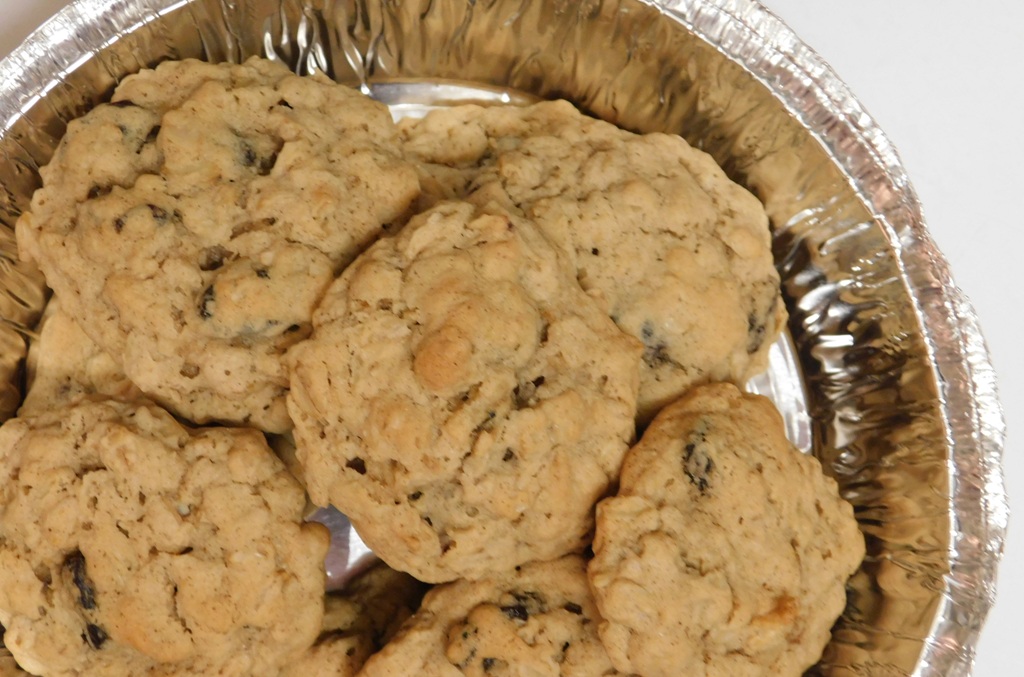
This week, I’m expressing thanks for Dad’s homemade oatmeal-raisin cookies.

That’s all. Just something simple.

Cookies.

When you’re having a summer of frustrations, and then your air-conditioning goes belly-up, when your dad makes cookies and gives you some . . . it’s just really nice.

Thanks, Dad!

They were delicious.

Sunday, July 10, 2022

Jar of Goodness 7.10.22: First Aid Kits

. . . The weekly virtual “gratitude jar.”

This week, I’m expressing thanks for first aid kits.

Now hold on! It’s not what you think. I haven’t had an accident! I’m fine.

But after my car died, I went and visited it and pulled out all my personal possessions, including all the impacted stuff down by the spare tire, hidden under the trunk flooring. And I made some discoveries.

I had been driving around with not one, but two first aid kits! Both very old. When I got the 2003 Civic in January 2004, my parents got me a brand-new first aid kit to go in it.

But I also had the first aid kit they’d gotten for me when they bought my 1989 Civic, too! And so both of these kits ended up in the 2003 Civic. One was stored by the spare tire, the other in a backpack that holds miscellaneous spare stuff. A change of clothes, a toothbrush, some rope, some wire, an emergency blanket, a flashlight (batteries dead, of course), a Schrade multi-tool and its holder, an old, second-edition copy of the National Geographic Society’s Field Guide to the Birds of North America, and other necessary essentials.

And here’s the gratitude bit: I’ve never had to use either of these first aid kits. I mean, not since 1989. I’m racking my brain, but I can’t think of a time I even used a single band-aid out of them. Not for me or for anyone else. I can’t think of a time when I even used the kits’ scissors for something mundane, like clipping a coupon out of a paper. (Sure, I've had accidents and needed band-aids and stuff, but I've never had to bust into these kits while on the road.)

(I’ve always carried jumper cables with me, too, but although I used them plenty of times with my 1989 Civic, I’ve never needed them for the ’03, in part because we’ve had AAA for so long.)

My sense of gratitude is multiplied by the fact that these kits were both gifts from my parents. What a nice thing to give someone—a first aid kit. You know . . . just in case.

But here’s the kicker: about a week before my car died, Sue had just acquired a brand-new first aid kit for the Civic. She got it along with some other over-the-counter stuff (for free or discounted or something) as a perk with Medicare. Was this third first aid kit some kind of sign, or omen? In retrospect, it seems uncanny.

Anyway, I’m amused by it, but mostly I feel grateful. I feel well-cared-for, both by the people who love me and, in a sense, by good fortune, or Someone up above.

For fun, here are the contents lists and contents of the three kits. The most striking difference is that the 2022 kit has a single sheet of paper, printed on both sides and folded, as the entire first aid instructions. The previous two kits have regular little booklets. I guess everyone’s supposed to be able to turn on a phone and Google for medical advice now. Hope your batteries last!

Johnson & Johnson First Aid Kit, ca. 1989

American Medical Association First Aid Kit, ca. 2003

Equate First Aid Kit, 2022

Sunday, June 26, 2022

Jar of Goodness 6.26.22: This Couple

. . . The weekly virtual “gratitude jar.”

This week, I’m expressing thanks for my parents.

June 24, 2022, was their sixtieth wedding anniversary!

As I’ve aged I’ve understood, more and more, how the partnership of marriage is both simple and complex, easy and difficult, essential and a blessing.

My parents have been excellent role models for how to live generously, gently, compassionately, helpfully . . . and fully.

Their blessing has blessed me, and everyone who knows them.

Sunday, June 19, 2022

Jar of Goodness 6.19.22: Dad

. . . The weekly virtual “gratitude jar.”

This week, I’m expressing thanks for my dad.

Because it’s Father’s Day!

Wednesday, May 18, 2022

The Black Walnut Tree

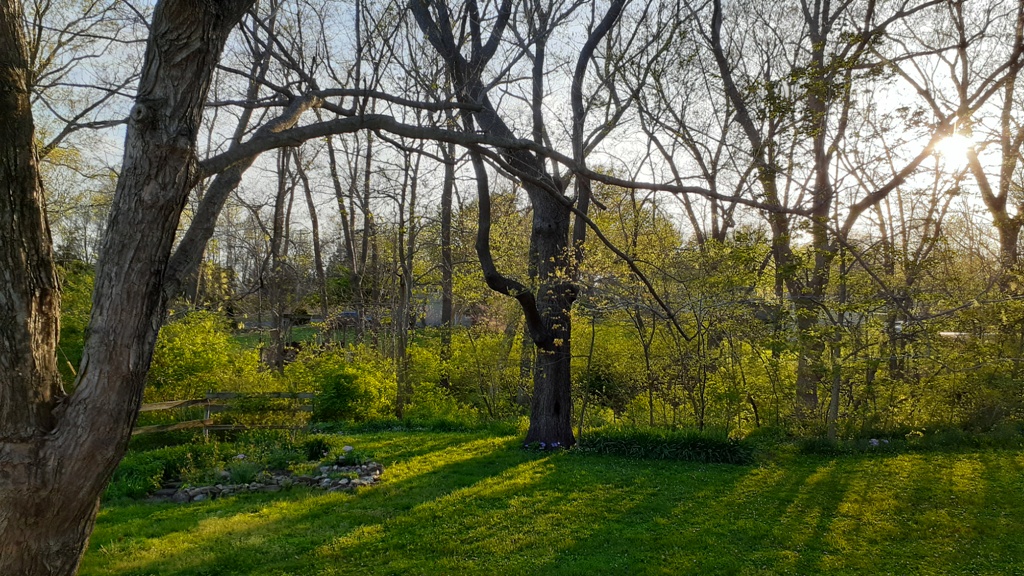
There’s a big old black walnut tree in my parents’ backyard. It’s right in the center, in the back, where the lawn meets the edge of the woods above the drainage ravine.

It was already a giant when they bought the house when I was on the way in sixty-five. All the branches are high out of reach.

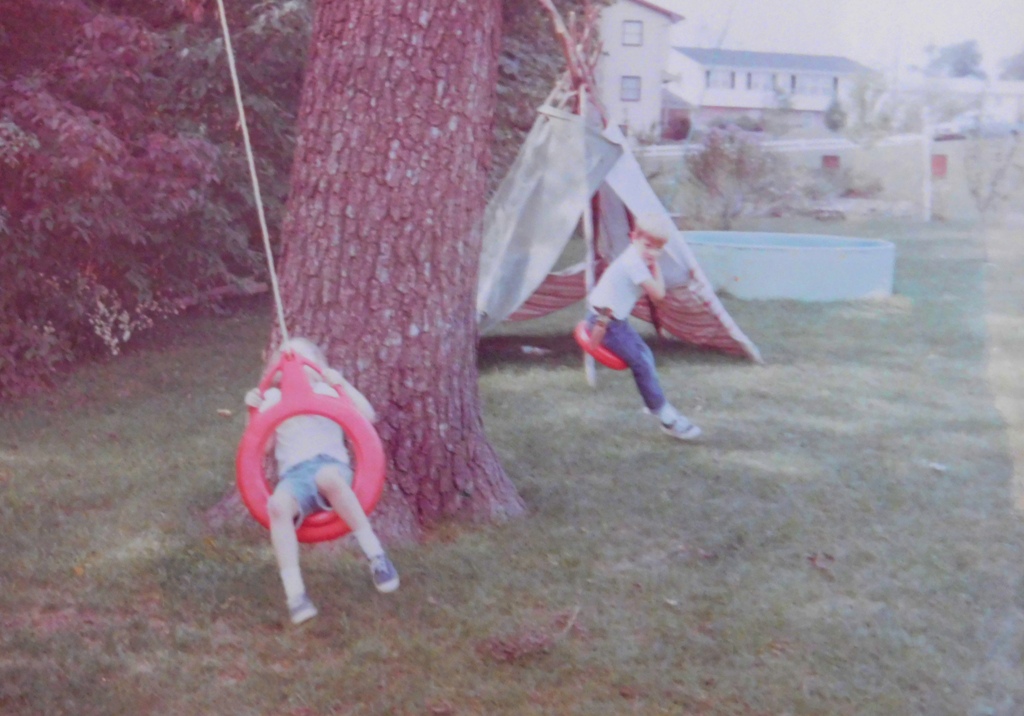
Dad hung swings for us from its huge lower limbs when I was a kid.

The night of Saturday, July 26, 1969, a severe storm blew the top out of the tree. A hard day’s work with saws cleared the debris from the lawn. Mom and Dad had plenty of help.

My brother and I didn't particularly help, but we sure had fun that day.

From that windfall and more, my folks used some of the fallen branches and some old blankets and pieces of canvas to build a tepee for us kids in the backyard. So that summer and following years, our yard was popular among the neighborhood kids.

Some of the large sections of walnut became woodworking projects. Mom squirreled away several nice thick pieces. To this day, I use one of the smaller chunks—which I carefully sanded and polished, as a preteen—as an incense burner. There's a public side and a private side.

Then in the late 1970s, Mom learned about juglenone when she tried to grow a tomato back near the tree. The tomato plant grew tall and spindly, and it begrudged us flowers and fruit. At the time, I didn’t care much, since I never cared much for raw tomatoes. (They’re still not a favorite.)

The nutmeats from the tree didn’t amount to much, as too many of them were dried and shriveled to make it worthwhile to crack them open. The squirrels found plenty of them to eat, however, and nested in its branches and ran around, like rollercoaster cars, on its wide, undulating, spreading limbs. Recently, my parents had a clan of gray squirrels with a lot of white patches in their fur, which was fun to see.

There has always been a vertical split in the trunk facing the house. It’s morphed over time into a more rounded hole. But the split was always a curious thing for me. Over the years, it became an entry way for the carpenter ants, bees, snakes, and other animals that have inhabited its hollow interior.

Paul and I used to pick up fallen walnuts and chuck them into the woods, practicing our pitches by aiming for random tree trunks. My fingers turned black from the juices, but I didn't care, since I wasn’t such a girly-girl. Chucking the nuts into the woods served a useful purpose, too, since it made mowing easier, and walking, too, for that matter.

I have so many memories of enjoying the backyard with that big tree providing us shade. It’s still standing, doing fine, its hollow space quite recently a home for a family of barred owls.

It’s truly a grandmother tree, and I thought I’d sing you this little song of praise.

Tuesday, October 5, 2021

Dad's Travels in Europe, Christmas 1954

I recently talked to Dad about his memories of the time he went to the Munich Hofbräuhaus. I took notes, and here, I will write what he told me. I hope I’ve got all the facts and names straight.

This provides context and insight into the 1954 Hofbräuhaus am Platzl menu I posted pictures of earlier. I showed it to Dad (he’d given it to me a few years ago), and asked him to tell me about it. Apparently he’d been there around Christmas, since the menu was marked “Weihnachten 1954.”

And Dad said, “Yeah! We were there on Christmas Day! We had our evening dinner there (or maybe late afternoon).” He then told me all about this trip that he and about seven or eight other American students took over the Christmas break.

They were all studying at the University of Paris as part of the famous Sweet Briar Junior Year in France program. (Sweet Briar College is a historic women’s college in Virginia. The program is open to more than Sweet Briar College students, which is how Dad, a male University of Missouri student, could participate.) Most of the Sweet Briar students were from well-to-do families, while Dad, as you probably know if you read my blog, is the son of a barber and was born and raised in the same house as his German immigrant grandparents; he grew up in Jefferson City’s Germantown neighborhood among people who didn’t own cars, who scrimped and saved, made do with what they had, and who made their own sauerkraut.

So the reminiscences flowed. Dad said none in their group spoke German (though clearly, they got by okay; this was a group of American college students who had proven their ability to speak French). Most of them were “girls” (yeah, girls: this is Dad’s terminology; it would be weird for me to call them young women while relaying his story to you). So, one of the girls—Kay Ingersoll—had an older sister who had done the Junior Year in France thing a few years earlier, so she had made suggestions, and Kay and her friends had gotten the whole mini-trip lined up—the itinerary, the train tickets, the lodging, etc. All Dad and the other students had to do was bring their passports, be prepared to secure visas at the borders, and have spending money for meals and such.

Off They Went!

So, from Paris, they took the train to Strasbourg, and then crossed the border into Germany. They spent their first night in Heidelberg, where Dad remembered the weather was “dreary.” They then traveled through Stuttgart, which was dreary in a different way, since as a major manufacturing town, it had been demolished in World War II (remember, Dad was there in December 1954, less than a decade after the war ended). “We didn’t stop in Stuttgart.”

Munich

Then it was on to Munich! They arrived on Christmas Eve. They spent two nights and did a lot of sightseeing. Some of them, including my Dad, a Protestant, attended Christmas Eve Mass at the big, most famous cathedral in the heart of Munich—I guess this is the Frauenkirche, which dates clear back to 1468. Dad remembers it was crowded, and that everyone in there was wearing black. (Dad has always had an aversion to wearing black; it’s so dreary!) Dad and his friends were seated in the back of the cathedral.

One detail about that evening sticks out in his memory—the interior walls of the cathedral had just been painted, and they were glistening white. The place smelled like paint! Germany was busy repairing things after the war.

On Christmas Day, they walked around, seeing all they could see. Dad remembers visiting one of the big squares where Hitler had massed his troops. To Dad, who had grown up during World War II watching news reels and memorizing details of German and Japanese planes, this must have been impressive. Also, as the son of German immigrants, he must have always felt an odd conflict about the wars with Germany. He’s always explained that he and his family, as patriotic American citizens, never felt they were at war with the German people; they were fighting the Kaiser in World War I; they were fighting the Nazis in World War II. So to him, Germany represented a homeland that wasn’t particularly his (it was his grandparents’), while also the homeland of America’s recent enemies.

I was imagining Dad so far away from home on Christmas Day, and I asked Dad if he had ever made a pricey transcontinental phone call to his parents while he was in Europe. “Oh, no! Never once! I sent home plenty of postcards and letters.” He recalled one or two of the Sweet Briar girls phoning home once, but it was basically for emergency use.

The Hofbräuhaus Meal

Dad and his chums had their evening Christmas meal there. At THE Hofbräuhaus am Platzl. The HB mothership. He remembers it was crowded and noisy, but he’s not sure if the other people were mostly tourists, or locals, or both. In general on the trip, they didn’t see many tourists—whether European or from elsewhere—in Germany or the other countries they visited, either. Europeans didn’t have any money for traveling in 1954!

In the great German beer hall, the eight or nine American college students were all seated together on one long table—close together, in the time-honored beer hall fashion.

“What did you get?”

“We all had beer!” Dad couldn’t remember what food they’d ordered. He said none of them could read the menu. I asked if they might have had goose. But goose might’ve been kind of expensive for their student pocketbooks, so maybe it was something else. Dad thinks they probably all ordered the same thing.

Another thing that stuck in Dad’s mind: one of the fellows in his group, Steve Schneider, got a charley horse in his leg! He abruptly jumped up and hollered in pain. Dad had never heard of a charley horse before (really Dad, really?), but he learned about it then. The sudden commotion made an impression on him. Steve had almost upset the dishes on the table as he sprang up in his agony!

Continuing the Trip

The day after Christmas, they hopped on the train and traveled to Salzburg, where the weather was still dreary. Dad remembers taking the tour of Mozart’s house and marveling at how little and narrow it seemed; “how’d they get a piano in there?” Dad also saw several of the places that would later be made famous in the movie The Sound of Music.

After Salzburg, they continued on the train to cross the first range of the Alps and spent two nights in Innsbruck.

Dad remembers taking the funicular (short cable railway) up the north side of the mountain; there were (and still are) two stages to get to the top. Dad described it as a tourist place; there were twenty or thirty people up there, walking around in the snow fields. Dad said he wasn’t prepared for it. He was wearing cheap black leather shoes he’d bought in Paris. The final trail to the top was less than 500 feet, and there was a wire cable to hold.

At the Kitzbühel, another summit in the Tyrol, Dad remembered the spectacular view on that sunny day: Standing in Austria, he could see Germany to the north and Italy to the south.

The Trip Continues

Dad remembered that the meals were always good. “They served us lots of bread! Good French loaves, or whatever. We put it in our pockets, the girls put it in their purses . . . and the waiters kept bringing it!”

He also remembered traveling west through the panhandle of Austria (the Tirol) and through Lichtenstein (they didn’t get off the train there) and to Switzerland. Dad said the customs agents at the border into Switzerland were really persnickety, taking their time to read everyone’s passports and visas.

The next stops were at Lucerne and Interlaken, in the Swiss Alps, where they did more sightseeing. In Lucerne, they saw the famous Kapellbrücke covered bridge with numerous paintings inside it, and the Löwendenkmal, or dying lion sculpture.

They took the special cog train that climbed the steep slope of the Grindelwald, where they went on real, bona fide horse-drawn sleigh rides, with jingle bells and everything, about four people at a time, through the mountain village.

Back at Interlaken, it was New Year’s Eve, and Dad and the other students, looking off a porch at their hotel, looked and listened for signs of celebrations, but there were none. Finally, at midnight, a waiter or the manager brought them each a glass of champagne.

Bern and Return

The group split up. Some of the richer students continued their tour by visiting friends or family in Europe, while Dad and the rest ended with one night in Bern. There was not much to do, since they left that night from the Bahnhof train station and took and all-night train to Paris. Around midnight, at the last stop in Switzerland/at customs at the French border, the travelers tried to ditch their Swiss francs so they wouldn’t have to exchange it for a fee in France.

There were hawkers on the platform who took advantage of the opportunity of travelers wanting to use up their Swiss money. They walked under the train windows and sold oranges to the travelers. Yes, even in the middle of the night. So Dad and his friends bought all these oranges, the train pulled out of the station, and they continued “rumbling around” through the night. “We must’ve gone through Dijon.”

At some point on the journey home, they finally opened the oranges and discovered they were red inside! They’d never seen such a thing. They didn’t want to arrive back in Paris and be sick, so . . . they threw the perfectly good, beautiful blood oranges out the windows, aiming for trees and what-not. “What fools we were!” Ah, hindsight.

Monday, August 30, 2021

A Conversation with Walter Schroeder, Mapper of Missouri's Presettlement Prairies

This is a short post. I'm just sharing a video with you. I hope you enjoy it.

I sure did.

For those of you who don't know, while I was in elementary school and junior high, my dad spent a decade meticulously researching the original handwritten descriptions of Missouri's landscapes made by the original land surveyors, who worked before Missouri was opened up to settlers, who plowed up the prairies, cut down the woods, suppressed natural fires, introduced cattle, etc.

From the surveyors' notes, he created a map (in the days before computers) of what parts of Missouri had been prairie (grassland) and which were wooded. The map was published by the Missouri Department of Conservation in 1981 and is still incredibly useful for conservationists and others who want an idea of how a piece of land was vegetated before settlers came in and altered it.

My dad's had a long career in both physical geography (landforms) and historical geography (especially settlement patterns). Many people in Jefferson City know him only from his popular books about the capital city and its German immigrant community—books he's written in retirement.

In this video, he touches on a lot of these subjects. A longer video, incorporating more parts of the interviews, is in the works, so stay tuned.

Also, be sure to check out the Missouri Prairie Foundation at moprairie.org.

I'm really pleased that the nice folks at MPF saw fit to do these interviews with my dad. I'm biased—I know he's a big deal—but it's nice to see others honor him, too.

Fun fact: my Grandma Schroeder was a charter member of the MPF. She and the other Garden Club ladies viewed native prairie conservation as integrally related to their gardening and landscaping interests. It seems that Grandma always spoke gushingly about the beauty of the prairies. She always pronounced it puh-HRARE-ie.

Monday, May 27, 2019

Memorial Day 2019

. . . And decorating the graves. How many people still do this, nationally? It seems that a requirement be that someone’s still living someplace near the cemeteries. Someone who didn’t move to another state. Also, someone who—if they did move out of state—didn’t stay away so long as to have the tradition of decorating the graves leave their consciousness. Basically, someone like me—this is becoming my job.

Pretty much all my relatives are buried in Jefferson City cemeteries, and there’s been an unbroken tradition of decorating graves since each was filled. Christmas, and Memorial Day.


In Buddy’s Stories, Dad shared his memories of the whole family piling into his Aunt Minnie’s Lincoln Zephyr to decorate the graves, with water buckets on the floor between their feet filled with peonies, weigela, mock orange, and whatever else was blooming in the backyard. (You all have his latest book, right?)


Each year as the peonies, roses, and mock orange starts to bloom in our yard, I think, “Well, it’s getting close to Memorial Day, isn’t it.” I don’t really need a calendar for it, and I don’t need to see “Memorial Day Sale!” yelling at me in newspaper ads. These are the exacting same peonies, roses, and mock orange plants that once supplied Grandma with flowers for graves.

Dad and Mom, and Uncle Richard and Aunt Carole, have done these acts of devotion and memorial since Grandma and Aunt Minnie were no longer able to do so. Aunt Minnie died in 1980, and between her and Grandma, she was the one with the car, so Dad and Richard had been driving Grandma to decorate graves since at least that time. Until 2000, when Grandma took her place in the earth beside her husband.


Dad’s and Uncle Richard’s continuing attention to these rituals has always impressed me with its tenderness, its attention to detail, its steadfastness. Its obstinate refusal to go full-on plastic. And its privacy: because unless it’s part of a public ceremony involving the graves of military veterans, the decoration of graves is always a private ritual.

And it is a ritual. Setting the date for when we’re meeting out at Riverview. Driving slowly to the well-known locations that anyone else would have to hunt for, parking, opening the trunk or back door of the vehicle to create a little work station for fiddling with the flowers, ribbons, stakes, wire, wire cutters, and whatever else.

Often, the different tasks wind up certain people there. At Christmas, Uncle Richard will drive in the wooden stakes, while I cut the lengths of wire, while Dad arranges the greenery and ribbons. Or maybe I’ll do the arranging while Dad cuts the wire. I’ve taken to bringing a whisk broom with me to clean grass clippings off the stonework. We usually pick up any trash we see, too, wherever we see it.

After making the rounds of Riverview (rounds are literal, since the cemetery drives make big loops around the sections)—decorating the graves of Mom’s Aunt Lyddie and her family, Dad’s Aunt Minnie and her family, and, often, Marie Korsemeyer, who was basically an aunt to Dad, and one of Dad’s dear friends, and one of my dear friends.


Then, we drive on to Hawthorne and decorate the graves of my maternal grandparents. Then, often, we go to the old Lutheran cemetery overlooking Highway 54, and to Woodland to decorate Mom’s great-grandparents and grandparents.


For Memorial Day, Mom and Dad picked out a variety of imitation flowers (as you can see from my photos)—bright colors, natural-looking varieties that we connect with the ones whose graves we decorate. (Grandma Schroeder was in love with sunflowers, for example.)

At Christmas, we use cedar boughs that my cousin Phil gleans from his property northeast of Centertown; Uncle Richard and Aunt Carole bring them, while Dad brings the big, flocked, bright red ribbons. (And I keep forgetting to bring gloves!)


After the decorating is done at a site, or while one of us is putting the finishing touches on an arrangement, we often stand around and chat a little bit about the ones lying below us. It’s not maudlin talk. With Aunt Minnie, we often say, “Oh, she would like this arrangement—it’s so pretty!”


And Dad points to the stones nearby, naming the names, and talks about how a lot of Aunt Minnie’s best friends were buried in the same area.


For me, and I suppose overall for my family, Memorial Day is primarily a day for remembering those who now lie under the earth. It’s always kind of confused me that the rest of our nation seems to see it as a day for remembering only deceased military people—for waving flags and such. Because didn’t all our forbears struggle, deal with privation, make sacrifices, live their lives so that we may live? I don’t want to diminish the sacrifice made by people fighting wars, but by the same token, let’s not diminish the losses suffered—and the lives lived—by the ones who didn’t march off to war.